

Blog
Working your cut list before you order cabinet doors

There is no cut list to send anybody. Every order goes through the ordering system on this site, and the person placing it types the dimensions in. So the useful work is not formatting a list — it is settling every number the form will ask for before you sit down at the screen, because that is the point at which a wrong decision becomes a made-to-order door.
This is the sheet a shop works out first. Nothing here needs to be emailed anywhere.

1. Finished sizes, not opening sizes
The form asks for the width and height of the door you want, to the sixteenth of an inch. It does not ask for the opening and work the door out for you, and that is deliberate: only you know the overlay and the reveal you are building to.
So the first column of your sheet is finished door size, and the arithmetic that produced it is yours. If you are working from openings, our guide on how to measure for replacement doors walks the conversion, and the reveal between doors covers the gap you are leaving between pairs.
Two habits save more scrap than anything else on this page. Measure every opening rather than one of each size — a run of five that should be identical rarely is, and on an older kitchen it is often out by a sixteenth or two. And where a run genuinely varies, size to the worst opening in the run, because a reveal that changes across a row is the thing anyone notices from across the room.
2. Overlay, decided once
Overlay is how much of the face frame the door covers. It is a single decision that then applies to most of the kitchen, and it is the one most likely to be assumed rather than settled. If you are matching an existing kitchen, the existing hinges have usually decided it for you already — our hinge overlay size chart is the quickest way to read it off what is already there.
Write the overlay at the top of the sheet, not against each door. If it is written once, it is consistent once.
3. Boring, or none
The form asks whether you want hinge boring, and where. Two legitimate answers:
- Bored to your pattern. Faster on site, and right when the frames are square and you trust your measurements.
- Unbored. You bore them against the frames once the doors are in front of you. On a reface with existing frames this is what plenty of shops choose, and it is not a lesser option.
If you are reusing existing frames with existing holes, new doors into existing hinge holes is the one to read before deciding.
4. Species, and whether the panel matches
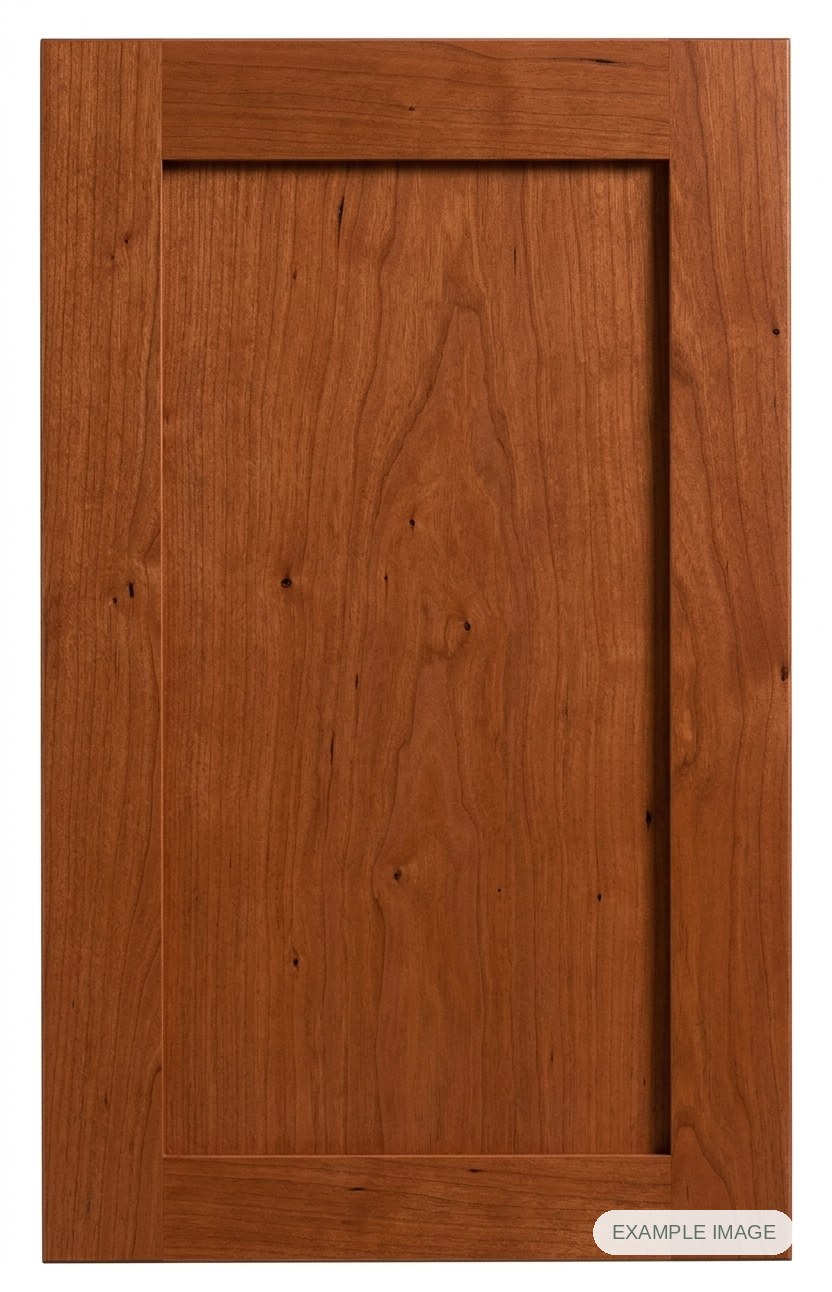
Species is a cost decision as much as an appearance one, and the spread across the range is wide — paint grade at one end, rift sawn white oak at the other. Decide it before you price the job rather than after.
On a five-piece door there is a second question the form will ask and a sheet often misses: what the centre panel is. A paint-grade door can take an MDF panel or a solid one, and they behave differently under paint. If the kitchen is being sprayed, MDF panels give a flatter result and will not telegraph a joint line; if it is being stained, the panel has to be the same species as the frame.
5. Drawer fronts: slab or five-piece
This is a separate line on your sheet, not an afterthought on the door line, because it changes the rate the drawer fronts are costed on. A slab front is a single flat panel; a five-piece front is built like a small door with its own rails and stiles.
It is also the decision most often made by default. Say it out loud with the customer rather than inferring it from the doors, because plenty of kitchens deliberately mix — five-piece doors above, slab fronts on the bank of drawers.
6. Count, and the pieces that are not doors
Count the doors and fronts from the drawings rather than the elevation, and count the parts nobody lists: exposed end panels, the filler beside the range, the toe kick, the panel on the back of a peninsula. Those come in the same species and profile and the same order — matching them afterwards from a different run is where a job stops looking finished.
If you want a sanity check on the number itself, how many doors an average kitchen needs gives the range.
What the sheet looks like when it is done
One header block — species, panel, overlay, boring, profile — and then one line per piece with a finished width and height to the sixteenth. That is every field the ordering system will ask for, and filling the form becomes transcription rather than decision-making.
Everything is cut to the size you type, in 1/16" increments, with no minimum order and no account to open. If a size looks impossible or you want a second pair of eyes on an awkward run, send us the question before you order rather than after.
Browse the door range when the sheet is settled, or order a sample first if the species is the open question.