Summer 25% discount on all last year's products home decor

How to measure for replacement cabinet doors

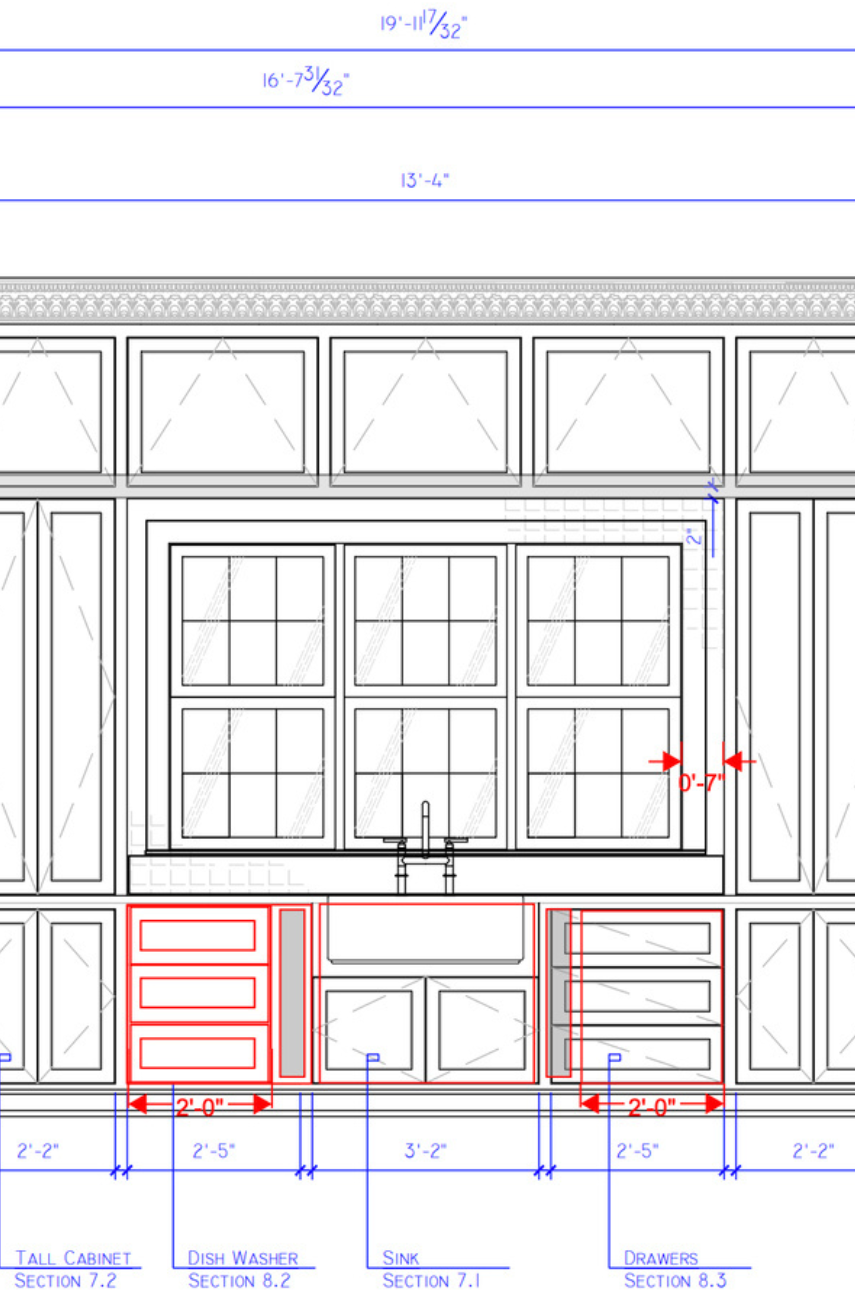
Start with one question: are you reusing your existing hinges, or fitting new ones? If you are reusing them, measure the door itself, because the existing boring has to be reproduced. If you are fitting new hinges, measure the cabinet opening and add the overlay you want. Measure every door individually rather than measuring one and multiplying.
| Reusing your hinges | Fitting new hinges | |
|---|---|---|
| What you measure | The door itself | The cabinet opening |
| Why | The existing boring has to be reproduced, so the door is the reference | The boring is cut fresh, so the opening is the reference |
| Also needed | The cup bore: diameter, depth, and how far in from the edge | The overlay you want on each side |
| Biggest risk | Copying a door that was itself wrong | Choosing an overlay the hinge cannot deliver |
What do I need to decide before I measure?
Are you replacing your hinges, or reusing what you have?
Everything downstream forks on that answer, and it is the reason most measuring guides leave people confused. They open with a tape measure. The tape is the easy part.
If you are reusing your hinges, you measure the door. The new one has to carry the same boring in the same place, so the existing door is the reference and the opening is irrelevant.
If you are fitting new hinges, you measure the opening and add the overlay you want. The boring is being cut fresh, so the opening is the reference and the old door is irrelevant.
How do I measure if I am reusing my hinges?
Take the door off and measure it flat on a bench. You need:
- Width and height of the door itself.
- Top of the door to the centre of the hinge hole, for each hinge.
- The cup bore — its diameter and its depth. That is the round recess the hinge body sits in, not the flat plate that screws to the cabinet.
- Edge of the door to the edge of the cup.
Most of what you find will be standard. A 35mm cup set 3mm in from the edge is what we bore and what you will almost certainly measure. If yours reads something else, that is exactly the thing worth knowing before anything is cut rather than after.
How do I measure if I am fitting new hinges?
Measure the internal opening of the cabinet where the door sits, then add the overlay the door should have on each side.
The overlay is how far the door laps over the cabinet frame, and it is a decision rather than a measurement — it follows the hinge you choose. Work out what you have now by measuring from the edge of an existing door to the outside edge of the cabinet.
The mistake that costs an eighth of an inch
The most common error is not the arithmetic. It is the tape.
People hold a tape loosely when measuring between two sides of an opening, and the little tongue at the end moves. Push the tape firmly against the opening, hold it there, and then read it. Letting it slide causes about an eighth of an inch of variance — and on doors made to your exact sizes, an eighth is the difference between a door that fits and one that does not.
Measure every door, not one door
Measure each one individually and write them down separately, even where you are certain two are identical.
Kitchens settle, and kitchens get modified. A run that was uniform when it was installed can easily be out by a sixteenth or two twenty years later, and a kitchen that has had doors replaced piecemeal can carry two different sizes that look the same. It costs ten minutes to check and it is the single most common reason a set comes back not quite right.
What if I am not sure what I am looking at?
If you are unsure about the overlay, or what hinges you have, take a photograph of the cabinets with the doors shut and email it over. Sean reads it himself rather than relying on a description, and it settles in thirty seconds the kind of question that can otherwise go back and forth for a week.
A second photo with a door open, showing the hinge, answers the rest. Between the two you will usually get an answer the same day, and it is a far better use of five minutes than measuring twice and still not being sure.
What about the drawer fronts?
Measure them the same way and at the same time, and write them on the same list.
A drawer front is simpler than a door because there is no boring to reproduce — it fixes to the drawer box from behind, so there are no holes to match. Measure the front you have, or the opening plus overlay if you are changing how it sits.
The one thing worth checking is whether your drawer fronts are the same style as your doors. A kitchen with five-piece fronts on deep drawers and slab fronts on shallow ones is a deliberate look, not an error, and it is worth deciding whether you are keeping it before you order rather than after.
What sizes can you actually make?
Doors run from 5 by 8 inches up to 49 by 96, and drawer fronts from 5 by 5, in sixteenth-of-an-inch increments. There is a two square foot minimum per door, so a very small door is built at its size and charged at the minimum.
That sixteenth matters here. You are not choosing the nearest size from a list and filling the gap — you are giving us the number you measured, so the measuring is worth doing carefully.
What if I get one wrong?
Made-to-size doors cannot be returned, so this is a fair thing to be nervous about, and it is why the photo offer above is there.
For what it is worth on the other side of the bench: in five years we have got a size wrong twice. The measuring is the part we cannot do for you, but every other part of getting it right is ours.
When your numbers are ready, every door is cut to them, about two weeks from order to shipped.
Frequently asked questions
Do I measure the door or the cabinet opening?
The door, if you are reusing your existing hinges, because the new door has to repeat the same boring. The opening plus your overlay, if you are fitting new hinges. That one question decides it.
How do I measure the hinge holes?
Measure the round cup recess in the back of the door: its diameter, its depth, how far its edge sits from the edge of the door, and how far its centre sits from the top. A 35mm cup set 3mm in from the edge is the usual answer.
What overlay do I have?
Measure from the edge of the door to the outside edge of the cabinet. That tells you whether it is full or partial overlay. If you would rather not judge it, send a photo of the cabinets with the doors shut.
Do I need to measure every single door?
Yes. Kitchens settle and get modified, so a run that was uniform when installed can be out by a sixteenth twenty years later. Measuring one and multiplying is the most common reason a set comes back not quite right.
How precise do the measurements need to be?
To the sixteenth of an inch, which is what we build to. The thing to watch is not your arithmetic but your tape — hold the end firmly against the opening rather than letting the tongue slide, which is worth about an eighth on its own.