Summer 25% discount on all last year's products home decor

Replacing arched or cathedral cabinet doors with shaker

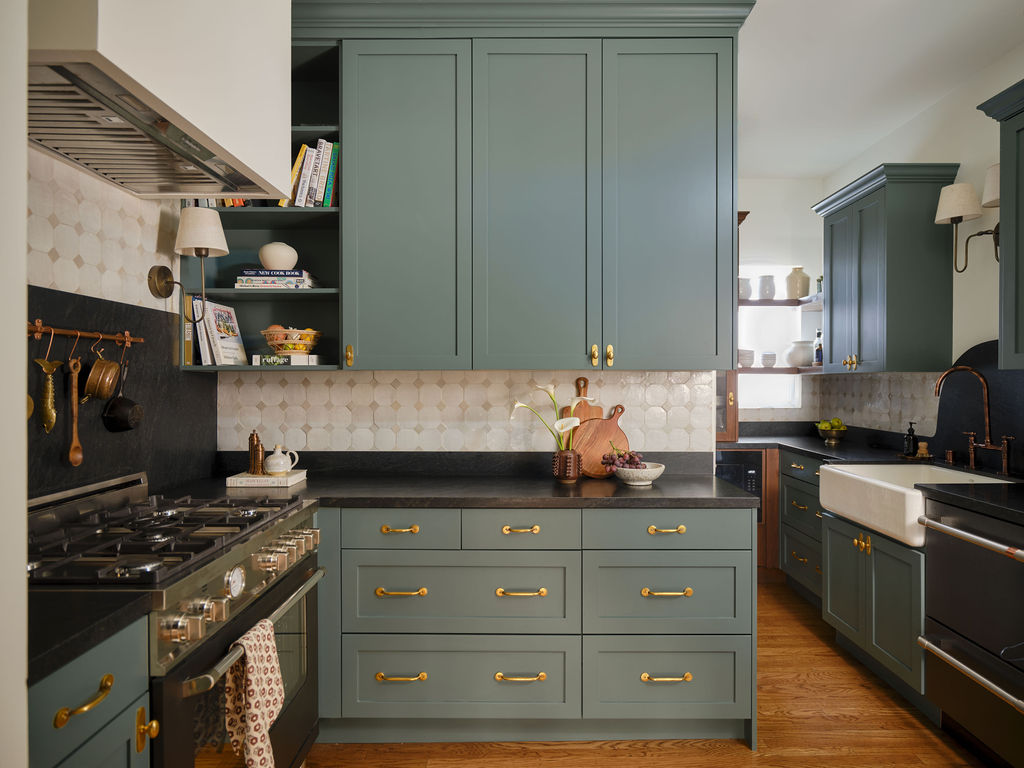
Yes, and it is the change that makes the biggest visual difference for the least disruption. The cabinets stay, the hinges usually stay, and only the doors and drawer fronts change. Measure your existing doors rather than assuming a flat door comes in the same size as an arched one.
| Part | Changes? | Why |
|---|---|---|
| Cabinet boxes | No | The carcasses are sound and stay exactly where they are |
| Doors and drawer fronts | Yes | This is the whole job, and the whole visual change |
| Hinges | Usually not | If the boring is copied, your existing hinges go straight back on |
| Worktop, sink, splashback | No | Nothing is disturbed behind the doors |
| Handles | Your choice | Existing holes can be reused, or new doors drilled to suit new pulls |
Can I replace cathedral cabinet doors with shaker doors?
Yes, and of all the ways to change how a kitchen looks, this is the one with the best ratio of effect to disruption. The boxes stay, the worktop stays, the plumbing is never touched. What changes is every surface you actually look at.
An arched or cathedral top is the most dating feature of a kitchen built between roughly 1990 and 2010. It is also the one thing you cannot paint your way out of, because the shape is the problem rather than the colour.
What is the difference between a cathedral and a shaker door?
A cathedral door has a curved or arched top rail, so the panel opening is shaped rather than square. They were usually made in oak or maple with a raised panel, and they were often stained rather than painted.
A shaker door is a flat centre panel inside four square-edged rails and stiles — what the catalogue lists as an inset panel door. Nothing is arched and nothing is raised. It has been the default in new kitchens for long enough now that it reads as neutral rather than fashionable, which is the useful thing about it.
The practical difference is that a shaker door has a consistent frame width all the way round, where a cathedral door has a deeper top rail to carry the arch. That is why a straight swap changes the proportions of a kitchen as well as its style.
Will the new doors fit my existing cabinets?
They will if they are made to your sizes, which is the part worth being careful about.
People assume a door is a door, so an arched 24-inch door can be replaced with a flat 24-inch door. Sometimes that is true. Often it is not, because doors in kitchens of this era were frequently made to the cabinet rather than to a catalogue, and because the door you are holding may not be the size printed anywhere.
Measure every door and every drawer front individually. Write down the width and the height of each. It takes twenty minutes and it removes the entire category of problem where a kitchen arrives and three doors are wrong.
Doors are made from 5 inches by 8 inches up to 49 inches by 96 inches, in sixteenth-of-an-inch increments, so whatever you measure is what gets built. There is no rounding to the nearest stock size.
Do I need new hinges?
Usually not. If you are keeping your hinges, the new doors need the same boring as the old ones, so measure it: the diameter of the round cup in the back of the door, how deep it is, how far it sits in from the edge, and how far its centre sits from the top and bottom of the door.
Our own standard is a 35mm cup, 13mm deep, set 3mm in from the edge, with the cups 3 inches on centre from each end. If yours matches, ordering is straightforward. If it does not, tell us your numbers and the doors are bored to those instead.
If you would rather start clean, doors can be bored for press-in hinges with two 8mm dowel holes, bored for screw-in hinges, or shipped blank. We sell the mounting plates too, so the whole set can arrive together.
What about the drawer fronts?
Do them at the same time. This is not upselling, it is the difference between a kitchen that looks finished and one that looks half done.
Cathedral-era kitchens usually paired arched doors with a matching raised-panel drawer front. Leave those in place and you have new shaker doors sitting above the exact detail you were trying to get rid of, at eye level, on the part of the kitchen people touch most.
Drawer fronts go down to 5 inches by 5 inches, which covers the shallow top drawers these kitchens are full of.
Should I paint or stain the new doors?
Doors arrive finished, so this is a decision to make before you order rather than a weekend to plan afterwards.
The one piece of advice worth giving: order a sample before you commit. A colour on a screen and a colour on a door in your own kitchen light are different things, and a sample costs a fraction of a set of doors. This matters more than usual on a shaker door, because a flat panel shows colour honestly where an arched raised panel breaks it up with shadow.
Is it worth it, against replacing the kitchen?
It depends on the boxes. If the carcasses are solid, the drawers run properly and the layout works, then replacing doors is the sensible job, because everything wrong with the kitchen is on the outside of it.
If the boxes are failing, the layout is wrong, or you want to move the sink, then doors are a plaster on a larger problem and the money is better spent once.
The honest test is to open a few cabinets and look inside. Most kitchens of this era were built with sound carcasses and dated fronts, which is exactly the case where new doors are the right answer.
How long does it take?
Two weeks from order to shipped. Doors arrive finished and, if you asked for it, bored for your hinges, so fitting is a screwdriver job rather than a workshop job.
Orders go through the ordering system rather than by email, so have your measurements for every door and drawer front written down before you start.
Frequently asked questions
Are shaker doors more expensive than cathedral doors?
Not inherently. Price follows size, species and finish rather than whether the top rail is arched. An arched door takes more work to make, so a flat shaker is rarely the more expensive of the two.
Can I mix shaker doors with my existing arched ones?
You can, but it rarely looks deliberate. If budget means doing it in stages, do it by room or by wall rather than mixing the two styles within one run of cabinets.
Will I see marks where the old doors were?
On the cabinet face, sometimes, if the finish has aged differently where the door covered it. A shaker door at the same overlay covers the same area, so it is usually hidden. If you are reducing the overlay, expect to see the old line.
Do I have to change my handles?
No. Existing holes can be repeated in the new doors, or the doors can be drilled for new pulls, or left undrilled so you can decide later.
What if my cabinets are oak and I want painted doors?
That works, and it is a common pairing. The cabinet interiors stay oak and the fronts become painted. The only place you will notice is inside an open cabinet, which is why some people paint the visible cabinet edges to match.
2 thoughts on “Replacing arched or cathedral cabinet doors with shaker”