Summer 25% discount on all last year's products home decor


What width are shaker cabinet door stiles and rails?

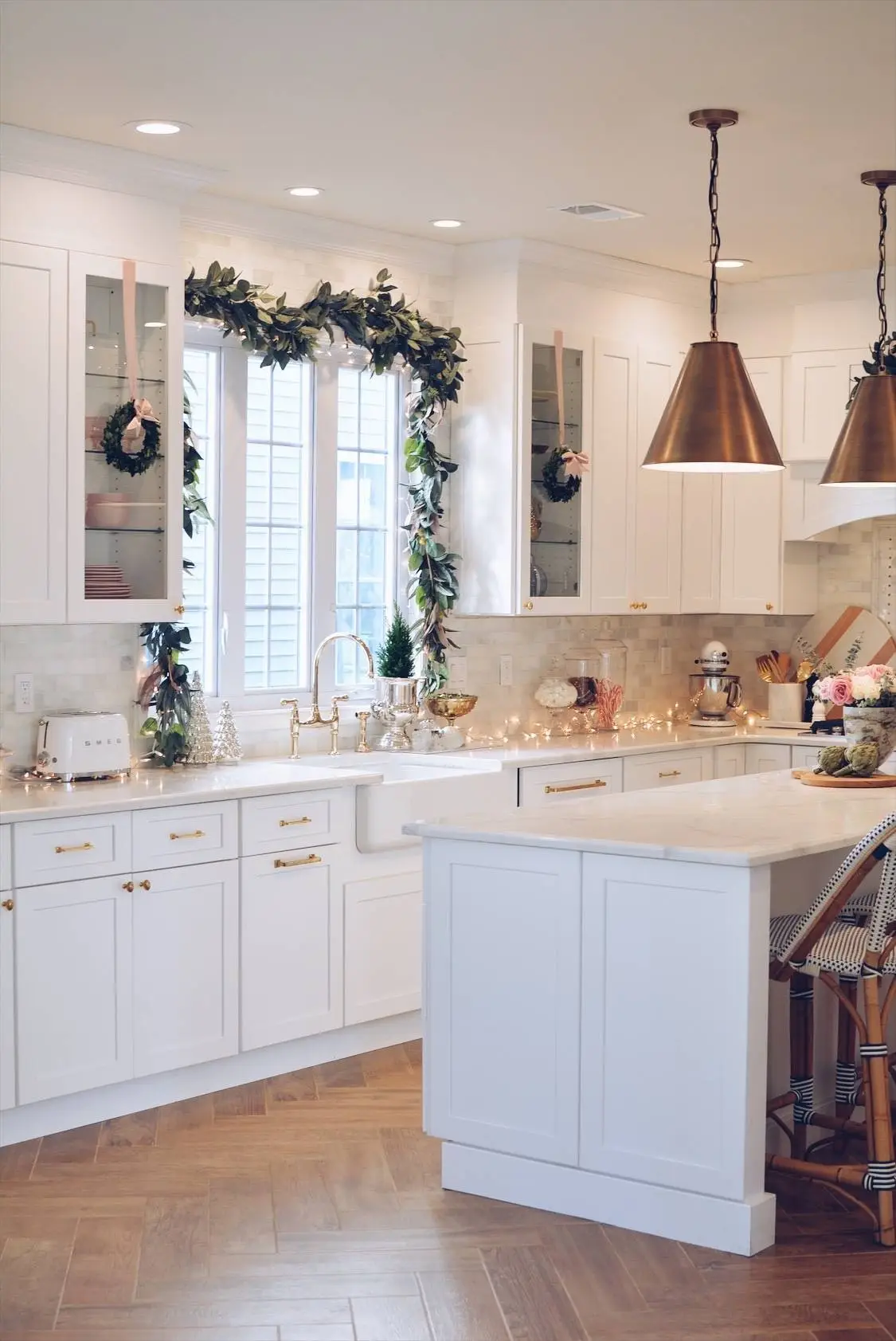
Ours are 2 1/4 inches wide on every shaker door, on all four sides. That is the common width across the industry and it is what most people picture when they picture a shaker door. The frame stays the same width whatever the door size, so the panel grows and shrinks around it.
| Frame width | How the door reads | Where it struggles |
|---|---|---|
| Narrower than about 2 inches | Light, modern, panel-dominant | Looks thin on a large door |
| 2 1/4 inches — ours | The familiar shaker proportion | Nothing, on a door of ordinary size |
| Wider than about 2 1/2 inches | Heavier, more traditional, frame-dominant | Crowds the panel out of a small door |
What width are shaker cabinet door stiles and rails?
Ours are 2 1/4 inches, on all four sides of every shaker door we make — the whole range is listed under inset panel doors.
The stiles are the two vertical pieces, the rails are the two horizontal ones, and on a shaker door all four are the same width. That evenness is most of what makes a shaker door look like a shaker door — the frame is a plain border of consistent thickness around a flat panel, with no wider bottom rail and no shaped top.
Is 2 1/4 inches standard?
It is the most common width in the trade and it is what most people are picturing when they picture a shaker kitchen. You will find doors built at 2 inches and at 2 1/2 inches, and both are legitimate shaker doors — the style is defined by the flat panel and the square edges rather than by one measurement.
What is not standard is mixing them. A kitchen with 2 1/4 inch frames on the doors and something else on the drawer fronts reads as wrong immediately, even to someone who could not name what they were looking at.
Why does the frame width matter so much?
Because the frame is a fixed width and the panel is not.
A shaker door keeps the same 2 1/4 inch border whatever size the door is. So on a big pantry door the frame is a modest border around a large panel, and on a small door the same frame takes up a much larger share of the face. The proportion changes even though nothing about the construction has.
That is why frame width is a design decision rather than a specification. It is invisible on doors of ordinary size and it is decisive on the small ones.
What does that mean for small doors and drawer fronts?
This is where the arithmetic gets real, and it is the part the forum threads never do.
Two stiles at 2 1/4 inches each use 4 1/2 inches of width before any panel exists. Two rails use the same in height. So on a door narrower than about 6 inches the panel is a slot, and on a front shorter than about 6 inches the rails nearly meet.
Doors here are made from 5 inches by 8 inches upward, so a 5 inch wide shaker door is possible — but it will be almost entirely frame. That is worth knowing before ordering rather than after, and it is the usual reason a shaker kitchen uses slab fronts on its shallow drawers.
How do I measure the frame width on my existing doors?
From the outside edge of the door to the inside edge of the frame, where it meets the panel. Take it on a stile rather than a rail, because the stile edge is usually cleaner to read.
Measure at the top and again at the bottom of the same stile. If the two disagree, the door was not made square, which is worth knowing if you are trying to match it.
Check a door and a drawer front, because kitchens that were assembled from more than one source sometimes carry two widths and nobody noticed.
How does frame width change a glass door?
More than on a solid door, because on a glass door the frame is the only solid thing there is.
A 2 1/4 inch frame around a glass panel reads heavier than the same frame around a wood one, since there is nothing else on the face to balance it. That is usually a good thing on a wall cabinet — the frame gives the glass an edge to sit in rather than floating — but it is the reason a small glass door can end up looking like a porthole.
If you are putting glass in a narrow cabinet, it is worth thinking about the proportion before ordering rather than after the frame arrives.
Should the drawer fronts use the same frame width?
Yes, where they are framed at all. A five-piece drawer front built with the same 2 1/4 inch frame sits under a shaker door and reads as the same family, which is the point.
The catch is the shallow drawers. Two rails at 2 1/4 inches each use 4 1/2 inches of height before any panel exists, so on a cutlery drawer front the rails nearly touch and the panel becomes a slot. The usual answer in a shaker kitchen is a slab front on the shallow drawers and five-piece on the deep ones — done consistently, so it reads as a decision rather than an accident.
Does the frame width change the price?
No. Doors are priced by the square foot, so a door of a given size costs what a door of that size costs regardless of how the face is divided between frame and panel.
Does a wider frame make a stronger door?
Marginally, and not enough to choose on. A wider stile has more material in it, which matters on a very tall door where the frame is doing real work resisting bow.
For a kitchen door of ordinary size, frame width is a styling choice and the strength question does not arise. Where strength does show up is hinge count: a tall door wants a third hinge, hung on the outer two first and the middle one adjusted last to just touch, carrying no load. A middle hinge tightened down like the others is what bows a tall door, not a narrow frame.
What about the panel?
On our shaker doors the panel is flat and sits inside the frame. Doors are 3/4 inch thick overall, which is the thickness the frame is built from, with the panel recessed into it.
The shadow line where the panel meets the frame is what the eye actually reads on a shaker door, and it is why the style survives repainting so well: even in a flat colour there is a crisp line describing the shape.
Every door is cut to your dimensions in sixteenth-of-an-inch increments, two weeks from order to shipped.
Frequently asked questions
Can I order shaker doors with a different stile width?
Ask. Our standard is 2 1/4 inches and it is what every door ships at unless something else is agreed. If you are matching existing doors at another width, that is a conversation worth having before you order.
Are the stiles and rails the same width on a shaker door?
Yes, on all four sides. That evenness is the defining feature. A door with a deeper bottom rail is a different style, whatever it is being sold as.
What is the smallest shaker door that still looks right?
Below about 6 inches wide the panel becomes a slot, because two 2 1/4 inch stiles use 4 1/2 inches before any panel exists. Doors are made from 5 inches wide upward, so smaller is possible, but it will read as mostly frame.
Do wider stiles look more expensive?
They look more traditional rather than more expensive. Wider frames read as older and heavier; narrower frames read as more modern. Neither is a quality signal.
How do I match new doors to my existing shaker kitchen?
Measure the frame width on an existing stile, top and bottom, and tell us the figure. Also order a sample, because matching an aged finish matters more to the eye than a sixteenth of an inch on a frame.
2 thoughts on “What width are shaker cabinet door stiles and rails?”