Summer 25% discount on all last year's products home decor


What size hinge do I need for my cabinet door overlay?

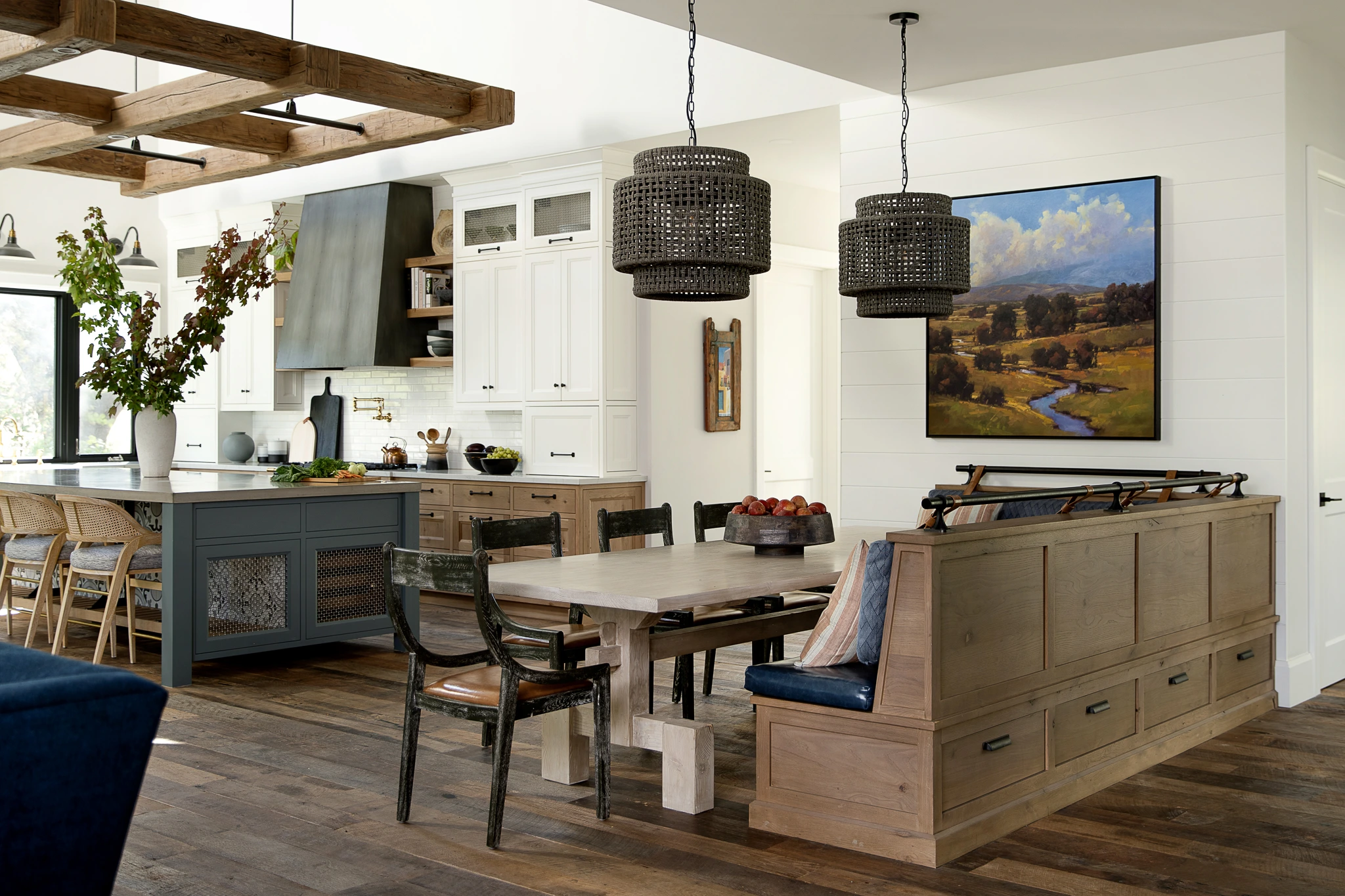
Measure from the edge of the closed door to the outside edge of the cabinet, then subtract the thickness of the cabinet side. What is left is your overlay per side. That number picks your hinge and your mounting plate height, and it sets the size of every door you order.
| Type | What you see | What the door covers |
|---|---|---|
| Full overlay | Doors almost touching, very little cabinet face showing | Nearly the whole cabinet side |
| Partial overlay | A visible frame of cabinet between every door | Part of the cabinet side, with a border left showing |
| Inset | Doors sitting flush inside the opening, level with the frame | Nothing. The door sits inside the opening |
What size hinge do I need for my cabinet door overlay?
The hinge follows the overlay, not the other way round. So before you can choose a hinge you need one number: how far your door laps over the cabinet on each side.
Both hinge systems we recommend — Blum and Salice — publish their own charts matching a hinge and a mounting plate height to a given overlay. Those charts are reliable and there is no point in us reprinting them. What almost nobody explains is how to get the number you look up, which is the part people get wrong.
What is overlay, in plain terms?
Overlay is the amount of cabinet that the door covers when it is shut.
Stand in front of a run of closed cabinets. If the doors nearly touch each other and you can barely see any cabinet between them, that is full overlay. If there is an obvious border of cabinet face showing all the way round each door, that is partial overlay. If the doors sit down inside the openings and their faces are level with the cabinet frame, that is inset, and inset is a different job with different hardware.
How do I measure my overlay?
With the doors shut, measure from the edge of the door to the outside edge of the cabinet side it laps over. Then subtract the thickness of that cabinet side. What is left is the overlay on that side.
Two things worth knowing before you take the tape out:
- Measure a door that sits over a single cabinet side, not a shared one. Where two cabinets meet, two doors share one panel and each one only gets half of it. An end cabinet gives you a cleaner reading.
- Check more than one. Overlay should be consistent across a kitchen, and where it is not, that usually means the doors were replaced at some point, or a cabinet is out of position. Either is worth knowing now rather than after the doors arrive.
The other measurement that matters is the internal opening of the cabinet — the clear space the door covers. Measure it top to bottom and side to side, pushing the tape firmly up against the opening. Do not hold it loosely and let the little tongue on the end slide, because that alone is worth about an eighth of an inch, and an eighth is a visible gap.
Why does the plate height matter as much as the hinge?
A concealed hinge is two parts: the hinge itself, which sits in the cup bored into the door, and a mounting plate screwed to the inside of the cabinet. The plate comes in heights — commonly 0mm, 3mm and 9mm — and that height is part of how far the door stands off the cabinet.
This is why a hinge on its own does not answer the question. The same hinge on a different plate gives you a different overlay. If you are buying hinges and plates separately, buy them as a matched pair from the same chart.
One rule from the shop floor that saves a lot of grief: never mix plate heights on a single door. Both plates on one door must be the same, or you are trying to adjust out a problem the hardware created.
What if my doors are inset?
Inset is a different animal. The door sits inside the opening rather than over it, so there is no overlay to measure — instead there is a reveal, the even gap all the way round between the door and the frame. Inset needs inset-specific hinges, and the tolerance for error is much smaller, because every edge of the door is on show against the frame.
We make doors for all three. If you are moving from overlay to inset, or the other way, that is a change of door size as well as a change of hardware, so it is worth a conversation before you order.
What reveal should I aim for between doors?
On a typical frameless run, aim for about 3mm between door edges — and more importantly, hold the same number across the whole kitchen. The eye reads inconsistency, not width. A run with a steady 3mm gap looks deliberate; a run varying between 2mm and 4mm looks like a mistake even though every individual gap is small.
The fastest gauge on a job is not your eye. It is a 3mm offcut held in the gap.
How many hinges does a door need?
Two for most doors. A third goes on when the door is tall enough or heavy enough that two would let it bow or sag, and a fourth is rare outside very tall pantry doors.
If you are adding a third hinge, hang the door on the outer two first and get it perfect before the middle one goes on. Then adjust the middle hinge until it just touches, carrying no load. A middle hinge tightened down like the other two is what bows a tall door, and it is a fault that looks like a warped door rather than a hardware problem.
What if the overlay I measure is not the same on both sides?
Then something has moved, and it is worth finding out what before you order.
The usual causes are a cabinet that is out of plumb, a run that has settled, or a door that was replaced at some point with one cut to a different size. None of them is fatal. All of them change the number you should order to, because a door cut to an average of two different overlays is a door that is wrong twice.
Measure both sides of a few doors. If the difference is consistent across the run, it is probably the cabinets. If it is one door in eight, it is probably that door.
How does overlay change the doors I order?
Directly. Door size is the opening plus the overlay on each side, so if the overlay is wrong the door is wrong by twice the error.
Because every door here is cut to your measurement in sixteenth-of-an-inch increments rather than sold in fixed sizes, there is no rounding up to a stock size and no filler strip to cover a gap. That is an advantage when the numbers are right and it is unforgiving when they are not, which is the reason this page exists.
If you would rather not diagnose it yourself, send a photograph of the cabinets with the doors shut, along with your opening sizes. Reading overlay off a photograph is quick and it takes the guesswork out.
Frequently asked questions
What is the most common cabinet door overlay?
Full overlay is what most modern frameless kitchens use, and partial overlay is more common on older face-frame cabinets. Neither is standard enough to order against without measuring, which is why this page starts with the tape rather than a number.
Can I change from partial overlay to full overlay?
Yes, and it is one of the biggest changes you can make to a kitchen without touching the boxes. It means larger doors, and usually new hinges and plates, because the hardware has to suit the new overlay.
Do I need different hinges for a corner cabinet?
Often yes. Corner and blind-corner cabinets, and any door that opens past 110 degrees, use specific hinges. Tell us what the cabinet is and we will point you at the right family.
What plate height should I use?
Whatever the hinge maker’s chart says for your overlay. Plate heights are commonly 0mm, 3mm and 9mm. The one rule that is always true is that both plates on the same door must be the same height.
How do I know if my doors are inset?
Shut a door and run your hand across it onto the cabinet frame. If the two are level, it is inset. If the door stands proud of the frame, it is an overlay door.
2 thoughts on “What size hinge do I need for my cabinet door overlay?”